
Your basket is currently empty!
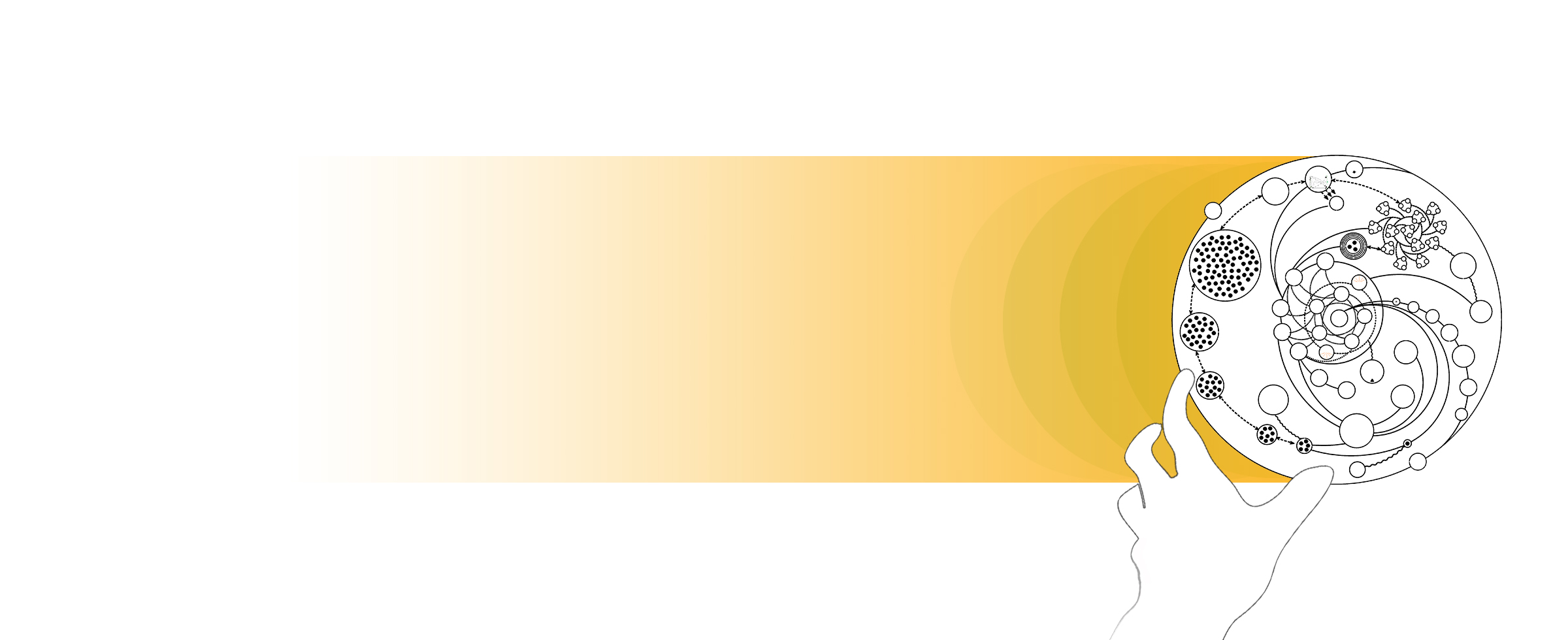
Transition / Eutopia Greenprint Open-Source Beta Version 01
Transition to Eutopia in a nutshell
- Gather the COW
- Cause a tipping point of consciousness/wait for crisis and hope.
- Establish a Local to Global Polycentric Governance and Citizen’s Assembly system.
- Produce a comprehensive Environmental Audit.
- Establish a resource-based FREEconomy supported by a Universal Basic Income, Universal Basic Services and GRREE budget.
- Create the UE portal / citizen interface blockchain wallet.
- Transition from ownership to stewardship.
- Use TEQs/TRQs
- Stop polluting / clean up our pollution.
- Live happily ever after.
Transition to Eutopia in a smaller nutshell
- Listen to the science and act with love. If we understand reality and look at any problem through love, we will care for ourselves, each other, and the biosphere.
- (Greenprint entree on ‘Love’ is conspicuously missing).
Key
- COW = Coalition of the willing.
- CA = Citizens’ Assembly
- UE = United Earth / United Earthlings.
- UEE = United Earth Economy.
- CARB FREEconomy = Capped Asset Resource-Based(101) Flexible Renewable Energy Economy. (An economy based on the amount of renewable energy available at any one time, with limits to individual ownership / consumption.)
- EAT = Environmental Audit for Transition.
- TEQs = Tradeable Energy Quotas.
- TRQ = Tradeable Resource Quotas.
- TEETS = Time / Energy Equation Table Sum.
- GloWS = Globe Welfare Service.
- GRREE = Green Resources/Renewable Energy Excess budget.
- UBI = Universal Basic Income.
- UBS = Universal Basic Services.
- TEE = Time/Energy Exchange (a professional and social job/need centre).
- Grey Resources = destructive activities / resources that are often very hard to stop using.
- Green Resource budget = the sum of safely useable resources and ecosystem services.
- PAC = Personal Asset Cap.
- PI = Personal Income.
- BAC = Business Asset Cap.
- BoB = Burned or Buried.
- PIP = Peace Insurance Pact.
Transition to Eutopia in a nutshell
- Gather the COW
- Cause a tipping point of consciousness/wait for crisis and hope.
- Establish a Local to Global Polycentric Governance and Citizen’s Assembly system.
- Produce a comprehensive Environmental Audit.
- Establish a resource-based FREEconomy supported by a Universal Basic Income, Universal Basic Services and GRREE budget.
- Create the UE portal / citizen interface blockchain wallet.
- Transition from ownership to stewardship.
- Use TEQs/TRQs
- Stop polluting / clean up our pollution.
- Live happily ever after.
Transition to Eutopia in a smaller nutshell
- Listen to the science and act with love. If we understand reality and look at any problem through love, we will care for ourselves, each other, and the biosphere.
- (Greenprint entree on ‘Love’ is conspicuously missing).
Key
- COW = Coalition of the willing.
- CA = Citizens’ Assembly
- UE = United Earth / United Earthlings.
- UEE = United Earth Economy.
- CARB FREEconomy = Capped Asset Resource-Based(101) Flexible Renewable Energy Economy. (An economy based on the amount of renewable energy available at any one time, with limits to individual ownership / consumption.)
- EAT = Environmental Audit for Transition.
- TEQs = Tradeable Energy Quotas.
- TRQ = Tradeable Resource Quotas.
- TEETS = Time / Energy Equation Table Sum.
- GloWS = Globe Welfare Service.
- GRREE = Green Resources/Renewable Energy Excess budget.
- UBI = Universal Basic Income.
- UBS = Universal Basic Services.
- TEE = Time/Energy Exchange (a professional and social job/need centre).
- Grey Resources = destructive activities / resources that are often very hard to stop using.
- Green Resource budget = the sum of safely useable resources and ecosystem services.
- PAC = Personal Asset Cap.
- PI = Personal Income.
- BAC = Business Asset Cap.
- BoB = Burned or Buried.
- PIP = Peace Insurance Pact.
New Maps for Eutopia
The extravagance and infinite complexity of the Earth zoomed out, is reduced to a boisterous child-god’s simplistic black and white depiction on paper, fearfully and greedily scribbled over with hard lines in the shifting sands and restless waters; the geopolitical overlays we animals are caged by. Here, we tend a living map instead, reshaped as our hearts and fears melt…
Land grabbed by neo-monarchs and their predecessors will be offered to respective local stakeholders for stewardship and/or displaced indigenous peoples. (There may be customised culture-specific UE polycentric governance interfaces for indigenous communities or any other non-tech integrated communities). Dialogue between all the Local and Global UE governance circles (prioritising the Local while drawing on data from the EAT) will re-imagine, sensitively redraw the maps and create a transition plan for making the best use of the lands and oceans for the maximum number of people, cultural preservation, biodiversity, crop yields and carbon sequestration, while delivering the Quarter Earth299 concept – returning nature’s property to nature, so to speak.
Over-developed/extractive industrial factions of civilisation (as opposed to indigenous people living gently on ancestral lands, for example) may have to retreat from some of these zones, for the sake of essnetial migration routes, etc. (To soften the blow and avoid conflict, there might be a generation’s worth of advance notice for the negotiated changes to land use, or the option for inhabitants to stay living gently and prioritise nature within those areas. However, as the demand/taste for polluting materials/goods wanes the world over, then these bastions of the old world will cease to provide value, and transition becomes inevitable). Then, wildlife reintroductions and reforestation, wetland and mangrove restoration projects, etc., can take place exponentially (which also falls under carbon sequestration).
Enclosing the enormous new wildlife zones within fences as protection from black market poaching and logging, etc., will be impossible and undesirable. I foresee several mechanisms protecting these zones with limited intervention.
One could plan settlements along the borders of designated wildlife zones and ask inhabitants to take guardianship responsibility. One could also impose the longest quarantining ‘rehabilitation’ for offenders. The black market, however, is largely fuelled by inequality: poachers are willing to take risks in order to improve their lives on one side, and wealth that inspires and enables this kind of temptation sits on the other. Financial equality and the end of poverty will all but eliminate this dynamic. We can also give more energy to rigorous systems for tracing extractive resources, such as timber or fish, so it becomes very difficult to shift illegal goods.
All humans, as emissaries of the UE, will also be charged with the grave responsibility of protecting the wilds for three reasons:
A) Because all of nature will have rights.
B) For the delight of wilderness and biodiversity; to grow back the Garden of Eden as a shared wonder project.
C) Healthy wilderness/biodiversity forms a biomimicry resource for the sciences (and human progress), and more importantly, it is our most effective arena for carbon sequestration, which will save us. Abundant healthy wildlife zones, particularly in the oceans, spill over their excesses into human zones. We will see that as nature re-emerges, our emergency diminishes, and our GRREE budget increases (as described in ‘The Transitioning Economy’ above). So, an appeal is made to the enlightened self-interest of saving humanity as well as plain old self-interest. As stewards of the shared commons, we are the eyes, ears, conscience, and whistleblowers, of nature.
Over time, the remaining biodiversity desert mono-crop agricultural land is portioned off and made available to those willing/able to learn and deliver small-scale, no-plough regenerative organic permaculture farming (to primarily service local needs, and restore biodiversity) alongside water management/retention plans298. Priority for land may be given to previously displaced citizens, refugees, slum dwellers71, etc., who want it, and who can also support the need for gentler food production (below).
The harvest or production of food, cleaning and delivering fresh water and energy are among the most important activities. The mindful transition of the land is therefore paramount so as to avoid famines and shortages that ultimately lead to fascism and totalitarian solutions111. We can learn from Zimbabwe, China, Madagascar114, etc., where sweeping changes were made based on ideology that ended in a lowered output of food production (and troubles). The process of transitioning land should also include establishing community/peer-to-peer support networks and education to avoid such a reduction in the overall output of food. Recommendations for crop viability/efficacy to specific land using scientific readings combined with local knowledge can also be made available.
Citizens’ Assemblies will have to deal with the problem of meat298 and deliver a plan for drastically lowering consumption while speaking to cultural attachments/addictions/entitlement issues.
Funding will be prioritised for establishing Precision Fermentation breweries in every locality (as private or UE initiatives) to produce no or low-emission microbial proteins, in step with the anticipated and rapid phasing out of animal agriculture.
With the UBI/UBS and an Asset Cap in place, there will also no longer be a financial incentive for farmers to work longer hours and produce as much food as they did before (and neither should they have to work such punishingly long hours). To share the burden, we will need a lot more farmers298!
For a start, we can find a large number of people in Western cultures at least, who are already saturated by office, factory, call-centre work and cramped city living, who would seize the opportunity for a different life with more geographically integrated communities, closer to open spaces, the soil, the wilds, etc. I can also foresee many of those people mentioned above, who were driven off their land, who live in slums, who lost their land or homes to climate change or war, etc., would also be tempted by the prospect of starting afresh. Plus, as Grey resource-based jobs are phased out, many people will find themselves at a loose end and seeking different activities. I also envisage seasonal participation in sowing and harvest re-emerging in the wider culture. (Picking mushrooms is part of Scandinavian and Eastern European cultures, and picking strawberries or pumpkins from local farms is still a tradition in the UK. We can build on this!) The Crops Pledge system298 also creates an open-source market and incentivises large to micro-scale local growers.
As transport infrastructure changes (see below), then land use within and around cities can also transition to space suitable for farming, making it easier for everyone to participate regardless of where they live.
Food will largely be produced and consumed locally, and the use of TEQs and TRQs (as well as the open-source EAT) will also help to avoid the need for top-down micromanagement. The system will naturally eliminate food waste and the use of single-use plastic packaging (by for example, retrofitting all food outlets with self-refill units, where possible).
The EAT will be continually kept updated – keeping track of wild fish stocks and game for example, setting sustainable quotas* that enable stakeholders to understand the ecosystem in real-time, and communicate with one another, so as to avoid the Tragedy of the Commons57. The quantities of grain and locations of grain stores can also be transparently recorded, enabling fair distribution and swift decentralised responses to emergencies/aid.
We also need to consider our priorities for land used to grow plants (or keep animals) for clothing, paper, industrial materials, tobacco, coffee, etc., although again, TEQs and an Asset Cap will largely deal with this without micromanagement.
Manu MacTaggart72 was onto something when he asked me to imagine: ‘One, like, mansion on top of a really big hill that everybody in the world had to fit in.’ Sea levels rising and forced temperature migrations mean we’ll be sharing considerably less space, incrementally. So, in which ever way we reimagine the maps, we’ll have to account for these changes and allow for flexibility as people and animals are forced to move.
*The EAT will illuminate the dire situation of the oceans, and in response, the UE may set a maximum size of fishing vessels, ending the age of industrial-scale fishing. (Trawling causes more greenhouse gas emissions than aviation). Fishing quotas will be drastically reduced and rapidly decreased alongside the individual’s decreasing TRQs for fish. Sea fishing for private consumption could still be unregulated.

Please try using the (efficient) ‘Six Thinking Hats’ method of parallel thinking for sharing your ideas.
It helps us to organise our thoughts and feelings. Wear the Black Hat for critisism/doubts; the Green hat for creative suggestions; the Yellow for positive responses, Red for gut feelings; White for information. I am wearing the Blue Hat now, when I say we are here to design Eutopia.
Simply write ‘Black’, ‘Yellow’, ‘Green’, etc, before your given response. Then, start a new paragraph for ideas of a different coloured hat.
Add Suggestion / Improvements