
Your basket is currently empty!
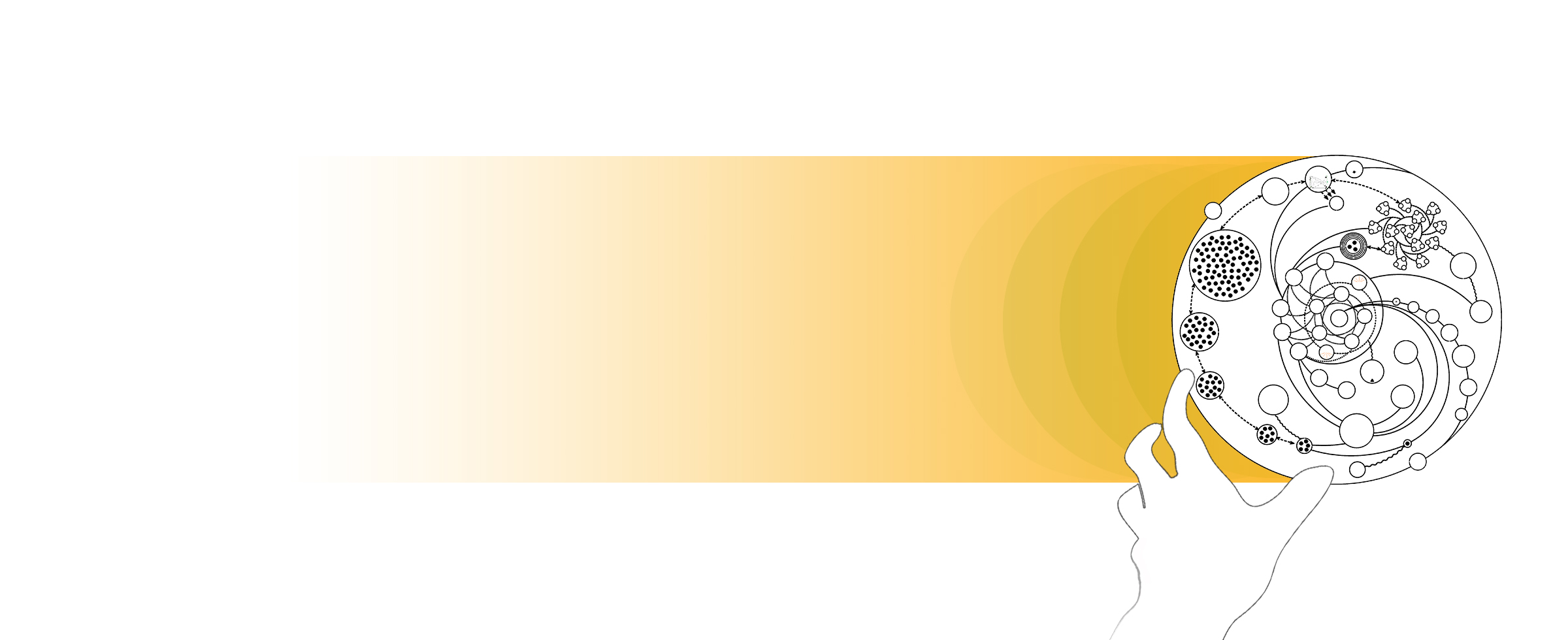
Transition / Eutopia Greenprint Open-Source Beta Version 01
Transition to Eutopia in a nutshell
- Gather the COW
- Cause a tipping point of consciousness/wait for crisis and hope.
- Establish a Local to Global Polycentric Governance and Citizen’s Assembly system.
- Produce a comprehensive Environmental Audit.
- Establish a resource-based FREEconomy supported by a Universal Basic Income, Universal Basic Services and GRREE budget.
- Create the UE portal / citizen interface blockchain wallet.
- Transition from ownership to stewardship.
- Use TEQs/TRQs
- Stop polluting / clean up our pollution.
- Live happily ever after.
Transition to Eutopia in a smaller nutshell
- Listen to the science and act with love. If we understand reality and look at any problem through love, we will care for ourselves, each other, and the biosphere.
- (Greenprint entree on ‘Love’ is conspicuously missing).
Key
- COW = Coalition of the willing.
- CA = Citizens’ Assembly
- UE = United Earth / United Earthlings.
- UEE = United Earth Economy.
- CARB FREEconomy = Capped Asset Resource-Based(101) Flexible Renewable Energy Economy. (An economy based on the amount of renewable energy available at any one time, with limits to individual ownership / consumption.)
- EAT = Environmental Audit for Transition.
- TEQs = Tradeable Energy Quotas.
- TRQ = Tradeable Resource Quotas.
- TEETS = Time / Energy Equation Table Sum.
- GloWS = Globe Welfare Service.
- GRREE = Green Resources/Renewable Energy Excess budget.
- UBI = Universal Basic Income.
- UBS = Universal Basic Services.
- TEE = Time/Energy Exchange (a professional and social job/need centre).
- Grey Resources = destructive activities / resources that are often very hard to stop using.
- Green Resource budget = the sum of safely useable resources and ecosystem services.
- PAC = Personal Asset Cap.
- PI = Personal Income.
- BAC = Business Asset Cap.
- BoB = Burned or Buried.
- PIP = Peace Insurance Pact.
Transition to Eutopia in a nutshell
- Gather the COW
- Cause a tipping point of consciousness/wait for crisis and hope.
- Establish a Local to Global Polycentric Governance and Citizen’s Assembly system.
- Produce a comprehensive Environmental Audit.
- Establish a resource-based FREEconomy supported by a Universal Basic Income, Universal Basic Services and GRREE budget.
- Create the UE portal / citizen interface blockchain wallet.
- Transition from ownership to stewardship.
- Use TEQs/TRQs
- Stop polluting / clean up our pollution.
- Live happily ever after.
Transition to Eutopia in a smaller nutshell
- Listen to the science and act with love. If we understand reality and look at any problem through love, we will care for ourselves, each other, and the biosphere.
- (Greenprint entree on ‘Love’ is conspicuously missing).
Key
- COW = Coalition of the willing.
- CA = Citizens’ Assembly
- UE = United Earth / United Earthlings.
- UEE = United Earth Economy.
- CARB FREEconomy = Capped Asset Resource-Based(101) Flexible Renewable Energy Economy. (An economy based on the amount of renewable energy available at any one time, with limits to individual ownership / consumption.)
- EAT = Environmental Audit for Transition.
- TEQs = Tradeable Energy Quotas.
- TRQ = Tradeable Resource Quotas.
- TEETS = Time / Energy Equation Table Sum.
- GloWS = Globe Welfare Service.
- GRREE = Green Resources/Renewable Energy Excess budget.
- UBI = Universal Basic Income.
- UBS = Universal Basic Services.
- TEE = Time/Energy Exchange (a professional and social job/need centre).
- Grey Resources = destructive activities / resources that are often very hard to stop using.
- Green Resource budget = the sum of safely useable resources and ecosystem services.
- PAC = Personal Asset Cap.
- PI = Personal Income.
- BAC = Business Asset Cap.
- BoB = Burned or Buried.
- PIP = Peace Insurance Pact.
Policing / Restorative Justice
Carrots and Sticks
The criminal justice system, with the police force on the front line, is currently primarily there to pick up the collateral damage of inequality, poverty, and neurological poisoning300 and to protect private property. The police are primarily the ‘stick’ of policy, often using threat/violence to solve problems, feeding into a vicious circle – treating the symptoms rather than the cause. The police are ‘fire-fighting’, so to speak:
‘Every societal failure, we put it off on the cops to solve it. Not enough mental health funding, let the cops handle it. Not enough drug addiction funding, let’s give it to the cops’
– David Brown, Former Dallas Police Chief, ‘Defund the Police’, Explained
The overarching aim is to create a world that barely needs policing or a justice and prison system (as below with the military). The systemic changes proposed in the Greenprint above aim to ‘prepare and feed the soil’ to meet our Maslow/Siksika needs77a. They will provide a sense of safety (i.e. stimulate the vagus nerve92), reconnect individuals with communities so that traumas can be quickly recognised and dealt with, allow material needs to be rapidly identified and met, allow quality time for raising children and their need for intimacy and affection, and foster a culture of being raised by the community47. With belonging, crimes become less appealing to commit. The changes will restore trust and belief in political processes by allowing everyone to play a meaningful part in them. We’ll clean up and stop producing poisons that negatively influence our neurological landscape and behaviour300, and we’ll build and grow a convalescence home rich in Vitamin N312. All of these can begin to drain the bog of dysfunctions many of us find ourselves stuck in, freeing ourselves from structural violence to peace.
We can’t blame people for being damaged by the current system or continuing with embedded devious habits/tactics that may have once been necessary for survival. Similar to cleaning up our toxic landscapes with care and attention to allow them to flourish, we’ll be sensitively dealing with the echo of a toxic culture that has found its home inside us.
These accumulated traumas obviously won’t be going away the instant we create a healthier and fairer system, so for several generations, I’d imagine, we’ll still need to catch and quarantine those who harm others or the planet: those with varying degrees of pathological psychopathy and violent tendencies at the extreme end, and self-entitled opportunists at the other. Humans may always need some form of authoritative arbitration occasionally, whether it comes from the state, community, or a local council/Thing218 of peers or elders (but perhaps I underestimate our potential).
The police will largely become surplus to requirement as our systemic changes heal us; they will implicitly ‘Defund the Police’, as the movement calls for*. That being said, some people (particularly black and brown people) have been traumatised by decades of biased, racist, sometimes lethal, ‘over-policing’, and to some, the police themselves have become an affront to dignity; their presence can itself be a form of harm. So, as part of our transition, there also needs to be an intentional reframing of policing and perhaps a softening of the ‘stick’ to build trust.
This will involve refocusing police practices, as well as dismissals or role changes of personnel unable to adapt and learn new approaches. Of course, every police force faces different challenges in their societies and within.
Police are often trained with some understanding of psychology and social skills. Still, resources for engaging deeply with either victims or perpetrators – who are frequently traumatised victims themselves are usually scant. There’s naturally a wide gap between an authority figure with the power to arrest you and a person with approachable familiarity. It takes a special kind of person who can manage both roles (if it’s at all possible in every instance).
We already have social workers: authority figures who represent care rather than force, so while we wait for peace and social cohesion to permeate society – we could fully integrate a well-funded, holistically-minded social services system into the police force. Social workers/therapists could always travel to incidents with the police, who can offer ample quality time to those who need it, with powers to source meaningful help for both victims and perpetrators. In many cases – perhaps most cases, the more caring figure could be the first responder – who has the strength of force, only as a backup.
To build resilient communities, we may also discuss decentralising aspects of policing responsibilities.
We will also need to rebuild all oppressive prison complexes and retrain or rehire new staff who understand restorative justice. These new quarantine facilities will be UBS-funded restorative justice centres (with plenty of trees) that aim to avoid further traumatising the inmates while giving purpose to life inside.
Since we are all beginning again, we may consider a re-evaluation of currently incarcerated prisoners for parole (with, among other considerations, the consent of victims). I’m thinking of people like Steve364, who wouldn’t hurt a fly.
Citizens’ financial equality will at least diminish the manipulation of justice. Additionally, legal expenses will be provided as part of UBS since disputes and confrontations in court are primarily viewed as peace talks and the beginning of restorative justice. There can be no disparity in funding between prosecution and defence.
The question is always, ‘Are we trying to heal each other and encourage the best of our humanity’, or ‘punish each other and provoke further cynicism and violence?’ Louis’70 story perfectly illustrates the outcome of the different approaches.
*Defunding the Police’ and directing the saved money to crime prevention initiatives, such as youth centres, mental health services, women’s refuges, etc., (all of which will be heavily supported by the UE), implies there is a limit to money, and as discussed ‘money is irrelevant’(107). If the police do more harm than good in certain situations, the service should be changed regardless.
Please try using the (efficient) ‘Six Thinking Hats’ method of parallel thinking for sharing your ideas.
It helps us to organise our thoughts and feelings. Wear the Black Hat for critisism/doubts; the Green hat for creative suggestions; the Yellow for positive responses, Red for gut feelings; White for information. I am wearing the Blue Hat now, when I say we are here to design Eutopia.
Simply write ‘Black’, ‘Yellow’, ‘Green’, etc, before your given response. Then, start a new paragraph for ideas of a different coloured hat.
Add Suggestion / Improvements