
Your basket is currently empty!
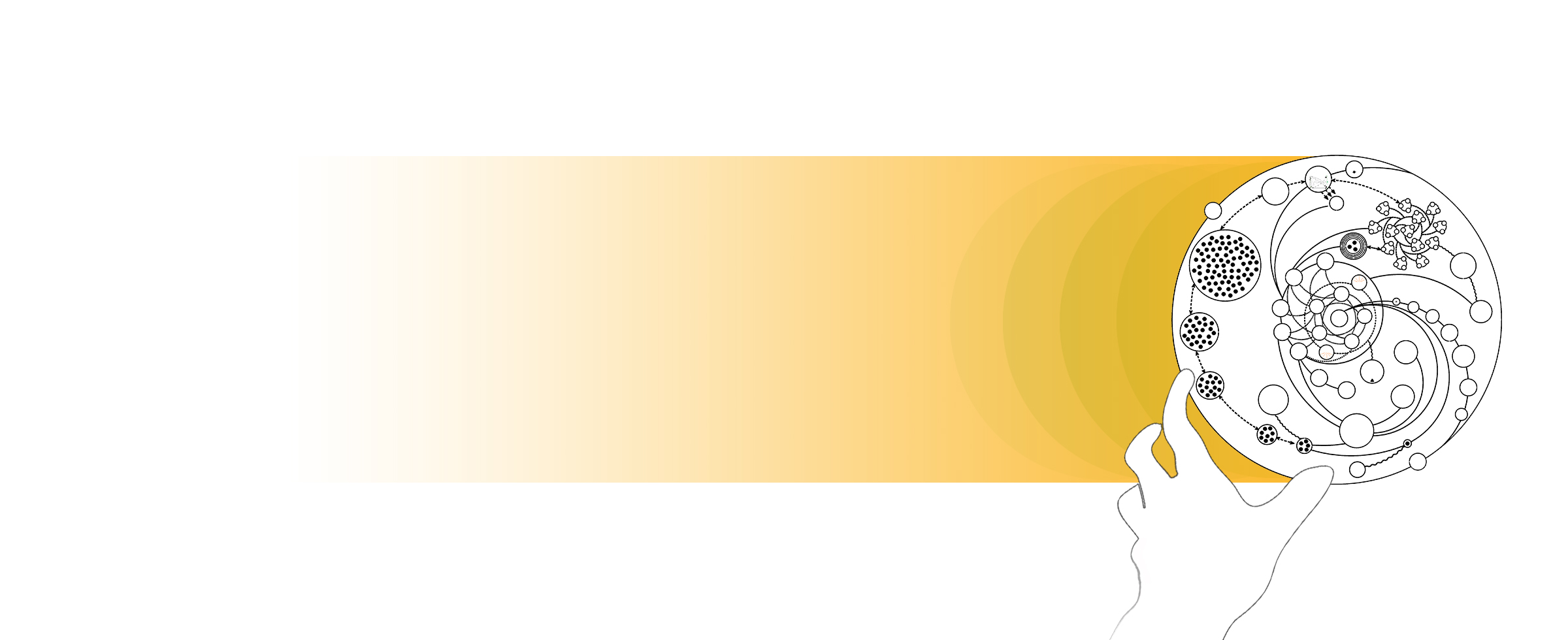
Transition / Eutopia Greenprint Open-Source Beta Version 01
Transition to Eutopia in a nutshell
- Gather the COW
- Cause a tipping point of consciousness/wait for crisis and hope.
- Establish a Local to Global Polycentric Governance and Citizen’s Assembly system.
- Produce a comprehensive Environmental Audit.
- Establish a resource-based FREEconomy supported by a Universal Basic Income, Universal Basic Services and GRREE budget.
- Create the UE portal / citizen interface blockchain wallet.
- Transition from ownership to stewardship.
- Use TEQs/TRQs
- Stop polluting / clean up our pollution.
- Live happily ever after.
Transition to Eutopia in a smaller nutshell
- Listen to the science and act with love. If we understand reality and look at any problem through love, we will care for ourselves, each other, and the biosphere.
- (Greenprint entree on ‘Love’ is conspicuously missing).
Key
- COW = Coalition of the willing.
- CA = Citizens’ Assembly
- UE = United Earth / United Earthlings.
- UEE = United Earth Economy.
- CARB FREEconomy = Capped Asset Resource-Based(101) Flexible Renewable Energy Economy. (An economy based on the amount of renewable energy available at any one time, with limits to individual ownership / consumption.)
- EAT = Environmental Audit for Transition.
- TEQs = Tradeable Energy Quotas.
- TRQ = Tradeable Resource Quotas.
- TEETS = Time / Energy Equation Table Sum.
- GloWS = Globe Welfare Service.
- GRREE = Green Resources/Renewable Energy Excess budget.
- UBI = Universal Basic Income.
- UBS = Universal Basic Services.
- TEE = Time/Energy Exchange (a professional and social job/need centre).
- Grey Resources = destructive activities / resources that are often very hard to stop using.
- Green Resource budget = the sum of safely useable resources and ecosystem services.
- PAC = Personal Asset Cap.
- PI = Personal Income.
- BAC = Business Asset Cap.
- BoB = Burned or Buried.
- PIP = Peace Insurance Pact.
Transition to Eutopia in a nutshell
- Gather the COW
- Cause a tipping point of consciousness/wait for crisis and hope.
- Establish a Local to Global Polycentric Governance and Citizen’s Assembly system.
- Produce a comprehensive Environmental Audit.
- Establish a resource-based FREEconomy supported by a Universal Basic Income, Universal Basic Services and GRREE budget.
- Create the UE portal / citizen interface blockchain wallet.
- Transition from ownership to stewardship.
- Use TEQs/TRQs
- Stop polluting / clean up our pollution.
- Live happily ever after.
Transition to Eutopia in a smaller nutshell
- Listen to the science and act with love. If we understand reality and look at any problem through love, we will care for ourselves, each other, and the biosphere.
- (Greenprint entree on ‘Love’ is conspicuously missing).
Key
- COW = Coalition of the willing.
- CA = Citizens’ Assembly
- UE = United Earth / United Earthlings.
- UEE = United Earth Economy.
- CARB FREEconomy = Capped Asset Resource-Based(101) Flexible Renewable Energy Economy. (An economy based on the amount of renewable energy available at any one time, with limits to individual ownership / consumption.)
- EAT = Environmental Audit for Transition.
- TEQs = Tradeable Energy Quotas.
- TRQ = Tradeable Resource Quotas.
- TEETS = Time / Energy Equation Table Sum.
- GloWS = Globe Welfare Service.
- GRREE = Green Resources/Renewable Energy Excess budget.
- UBI = Universal Basic Income.
- UBS = Universal Basic Services.
- TEE = Time/Energy Exchange (a professional and social job/need centre).
- Grey Resources = destructive activities / resources that are often very hard to stop using.
- Green Resource budget = the sum of safely useable resources and ecosystem services.
- PAC = Personal Asset Cap.
- PI = Personal Income.
- BAC = Business Asset Cap.
- BoB = Burned or Buried.
- PIP = Peace Insurance Pact.
World Citizens at Home on Earth
The goal will be a world of no borders (within our half/quarter of the Earth), no passports and VISA-free movement for all, from apartheid-like restrictions to completely unchecked freedom. To avoid a rush of migrants all at once, I recommend managing this process. Half a million extra people show up in Oslo; doubling the population would strain infrastructure and be no good for anyone. The same goes for half a million Norwegians arriving in Fiji.
In the first instance, though, there are millions of displaced people in a state of highly stressed and dangerous uncertainty who must be allowed to stop running from war and extreme weather. Our urgent priority must be accommodating their immediate need for welcome, rest and safety. People are dying, and trauma is building up, so waiting to extend hospitality will only prolong Eutopia’s emergence. I propose a time limit of six months to relocate all displaced people and close all refugee camps and holding facilities. No bullshit. If nothing else, there are plenty of empty office buildings, vacant hotel rooms, second homes and (docked) fossil-fuelled passenger ships we can no longer use, which can at least form part of a temporary solution. To avoid connotations with objectionable British Home Office plans for locking asylum seekers in detention centre ships (in the 2020s), local citizens may be offered the chance to exchange their homes (to be used by the new arrivals) for a sea view apartment on a cruise ship. More importantly, the approach would aid integration and avoid ghettoisation.
So, on the one hand, people receiving ‘the displaced’ with urgent needs, such as those above – are most likely privileged or over-privileged people in relatively stable countries. However, for sustainable relations, people’s capacity for tolerance should also be factored in. Don174,the WWII veteran, for example, told me that England no longer felt like his country; it didn’t feel like his home, thanks to the influx of migrants and their ‘strange’ cultures. Whatever we do or don’t do, some of the coming changes will be difficult for some people, especially those over 40 whose brains have reduced plasticity (like mine). However, integration can be managed mindfully to minimise displacing a sense of home when new homes are made available for the displaced!
For example, after the initial wave of urgent needs has been met, we can consider rational decentralised/distributed management of settled population numbers vs space to complement the desire for freedom of movement. Any natural or modern habitat has a limited carrying capacity for a species to thrive. For example, a person requires X amount of space and amenities, including a minimum ratio of nature to buildings/human-made infrastructure, for mental and physical health reasons, if nothing else312 *.
A place should also account for hospitality to visitors, i.e., accommodation and enough local abundance to generate a welcoming atmosphere. With these factors in mind, it may be possible to calculate the ideal carrying capacity for a pleasant home/neighbourhood for settled citizens. Free movement may need balancing with such an equation that can be naturally self-regulating when everyone feels the safety of home somewhere and understands the rationale of limits. This would not be prescribed, and each community could set their limits. (See also notes on the ‘exchange market’ in Resources – Property/dwellings above).
Redistributing resources to underdeveloped places and stabilising the climate (if we can) will quell the urgency of many people leaving their homes in the first place; people usually prefer the familiarity of their ‘place’350. (This kind of argument for resource equality might appeal to people who respond well to enlightened self-interest136 and racists.) We should expect emergency migrations to increase over the coming years, regardless, as people escape extreme droughts, heat waves, fires, flooding, etc.
*Culture, upbringing, and wealth will initially influence this factor, with people who grew up with their own bedroom, for example, being accustomed to more personal space than those who grew up with the whole family crammed into a single room. The idea, though, will be to recommend minimum acceptable standards and living space for a person and create rights for such needs that could influence policy / resource allocation.
Please try using the (efficient) ‘Six Thinking Hats’ method of parallel thinking for sharing your ideas.
It helps us to organise our thoughts and feelings. Wear the Black Hat for critisism/doubts; the Green hat for creative suggestions; the Yellow for positive responses, Red for gut feelings; White for information. I am wearing the Blue Hat now, when I say we are here to design Eutopia.
Simply write ‘Black’, ‘Yellow’, ‘Green’, etc, before your given response. Then, start a new paragraph for ideas of a different coloured hat.
Add Suggestion / Improvements